There is a particular sort of pleasure that comes from watching live television fall apart in slow motion. Not a cruel pleasure — nobody wants to see genuine distress — but the warm, conspiratorial pleasure of watching the polished machinery of broadcasting reveal the very human beings operating it. Britain, a nation that has spent decades perfecting the art of cringing magnificently, has elevated this experience into something close to a cultural institution.
From newsreaders who clearly didn't know their microphone was still on, to Cabinet ministers who forgot they were on camera, to weathermen who cheerfully announced the wrong forecast to eight million people, the archive of British live television mishaps is long, rich and endlessly rewatchable. And in an era of algorithmically curated, perfectly edited content, these moments stand out precisely because they couldn't be planned.
The Anatomy of a Classic TV Blunder
Not all on-air slips are equal. After examining decades of British broadcasting history, five distinct categories emerge — and together they account for virtually every moment that has ever been screenshotted, clipped and sent around a WhatsApp group at 11pm.
| Type of Blunder | Why We Love It | What It Reveals |
|---|---|---|
| The Hot Mic | What someone says when they think nobody's listening is always more interesting than what they say when they know we are | The gap between public performance and private opinion |
| The Autocue Fail | Watching a professional realise their script has vanished — and improvise at speed — is oddly compelling | Confidence and competence don't always travel together |
| The Uninvited Guest | A pet, a child, a delivery driver — domesticity crashing through the fourth wall | Real life can never be completely kept out of shot |
| The Wrong Graphic | When the control room puts up the wrong map, wrong face, or wrong score — and the presenter carries on regardless | Television is a team effort, and teams have bad days |
| The Ill-Timed Cut | The director switches cameras at precisely the wrong moment, catching something nobody was meant to see | Timing in television is everything — until it isn't |
Britain's Most Memorable Live TV Slips
These are not obscure archival curiosities — they are the moments that enter the collective memory and stay there. People who weren't even born when some of these happened know about them. That kind of cultural staying power is rare and says something meaningful about how we relate to the medium of television itself.
"I Didn't Know We Were Back" — The Newsreader's Admission
The scene is familiar to anyone who has worked in a TV studio: the red light goes off at the commercial break, and the presenter relaxes, stretches, mutters something under their breath. But when a BBC newsreader was caught mid-groan during a moment she believed was safely off-air, she turned to find the gallery had accidentally kept her feed live. Her sharp intake of breath — followed by the most collected recovery ever performed on national television — became one of the decade's most discussed clips. The BBC received dozens of calls. Half complained. The other half said it was the most human the news had ever felt.
The Minister Who Kept Talking After the Interview Ended
A senior government minister — who shall remain tactfully unnamed — wrapped up what had been a perfectly competent live interview on an ITV politics programme, shook hands with the host, and then spent the next forty seconds apparently unaware that cameras were still rolling. What followed was a sotto voce assessment of the interviewer's questions that the minister clearly felt was a private conversation with their aide. It wasn't. The clip was retweeted 200,000 times within the hour. The minister's press team issued a statement. The minister declined to comment on the contents of the clip. This was largely accepted as confirmation that the clip's contents were accurate.
When the Wrong Map of Britain Appeared Behind the Weatherman
Weather forecasting on British television is a science, but the graphics are an art — and one night, the art went distinctly wrong. A Channel 4 weather presenter delivered a complete and confident forecast about coming sunshine in the North of England while standing in front of a map that unmistakably showed Ireland. The presenter, to their eternal credit, did not break stride. They simply pointed at Donegal and said "the Lake District." Viewers in Dublin were reportedly delighted. The meteorological accuracy of the forecast for what was apparently now an offshore island remains unverified.
The Dog That Stole an Interview
A correspondent was delivering a live piece to camera outside a local town hall when a golden retriever — apparently completely unprovoked — wandered into frame, sat down beside them, and looked directly into the camera with the tranquil authority of a senior executive. The correspondent, aware that the dog was there but determined not to acknowledge it, continued for a further thirty seconds as the dog gradually edged closer. The subsequent clip was shared more widely than the story it was supposed to illustrate. The dog has since accrued a small but devoted fanbase and has appeared in at least three newspaper columns about attention economics.
The Guest Who Thought the Interview Was Over and Left
Timing matters enormously on live television. A prominent author appearing on BBC Breakfast to discuss their new novel was given what appeared to be the standard sign-off question — "Tell us where people can find the book" — and interpreted this, reasonably enough, as the conclusion of the interview. They thanked the presenters, stood up, removed their microphone clip and walked briskly off set. The presenters, who had in fact had two more questions, watched this departure in real time. The resultant pause — approximately four seconds of live television with two presenters, no guest and the ambient sound of a studio — became an instant classic of the genre. The author later said they had a train to catch.
The Studio Kitchen Disaster That Went Fully Wrong, Slowly
This Morning has produced more unintentional comedy per broadcast hour than almost any other programme in British television history. A live cooking segment — the kind where a celebrity chef makes something simple that anyone can do at home — went progressively, comprehensively wrong over eleven minutes as first the hob failed, then the oven proved to be on at the wrong temperature, and finally a bowl of batter was knocked sideways into the presenter's lap. None of this was planned. All of it was broadcast. The clip now has several million views and spawned a thread of recreations that lasted for months.
The Breaking News Ticker That Said the Opposite of What Was Announced
During a live breaking news broadcast, a Sky News presenter solemnly announced one set of facts while the ticker running along the bottom of the screen displayed — with equal solemnity — the precise opposite. It is not clear which of the two pieces of information was correct. What is clear is that for approximately four minutes, British television told viewers two entirely contradictory things simultaneously, and nobody in the studio or gallery appeared to notice. The clip became something of a philosophy lecture shorthand in online discussions about epistemology and the nature of truth. Sky News corrected the ticker. The philosophical discussion has not yet been resolved.
Why We Can't Stop Talking About Them
There is a sociology to be written about why these moments spread so reliably and survive so durably in the cultural memory. A few things seem to matter particularly.
"The best on-air blunders are the ones where everyone recovers with good grace. That's what makes them warm rather than cruel. They're reminders that behind the polish, there are people — and people make magnificent, human mistakes."
They are, first, almost always brief. A hot mic moment, a wrong graphic, an unexpected departure — these things happen in seconds and resolve themselves quickly. They're easy to describe, easy to clip, easy to share. In an attention economy, brevity is a superpower.
They feel authentic in a media landscape saturated with managed, pre-approved content. Every television interview is briefed. Every press conference is prepared. Every morning-show cooking segment is rehearsed. When something goes wrong and the preparedness falls away, what's left is something genuinely unscripted — and that rarity carries enormous value.
And they're usually, in the end, harmless. Nobody is injured. Nobody resigns. The dog returns home. The presenter gets dry clothes. The minister issues a statement. Life continues, slightly embarrassed but largely intact.
What These Moments Remind Us About Our Televisions
From the Studio to Your Sitting Room
Here is the thing about all of these moments: every single one of them was watched on a television screen by someone sitting in their sitting room, kitchen or bedroom across the United Kingdom. The beauty of the unscripted moment, the shared gasp, the communal laughter — none of it exists without the television set that carried it into British homes.
We take that for granted. We sit down, press a button, and the world appears on a screen in front of us. Until, of course, the screen goes dark. Or fuzzy. Or produces a high-pitched whine. Or simply refuses to turn on at all. And then the punchline of the ministerial hot mic, the dignity of the retreating author, the golden retriever's unearned confidence — all of it disappears.
The most memorable moments in British broadcasting were delivered to viewers through a piece of electronics sitting in the corner of a room. That piece of electronics — like all electronics — eventually needs attention. The question is whether you know where to find a good engineer when it does.
When Your Own Television Lets You Down at the Worst Moment
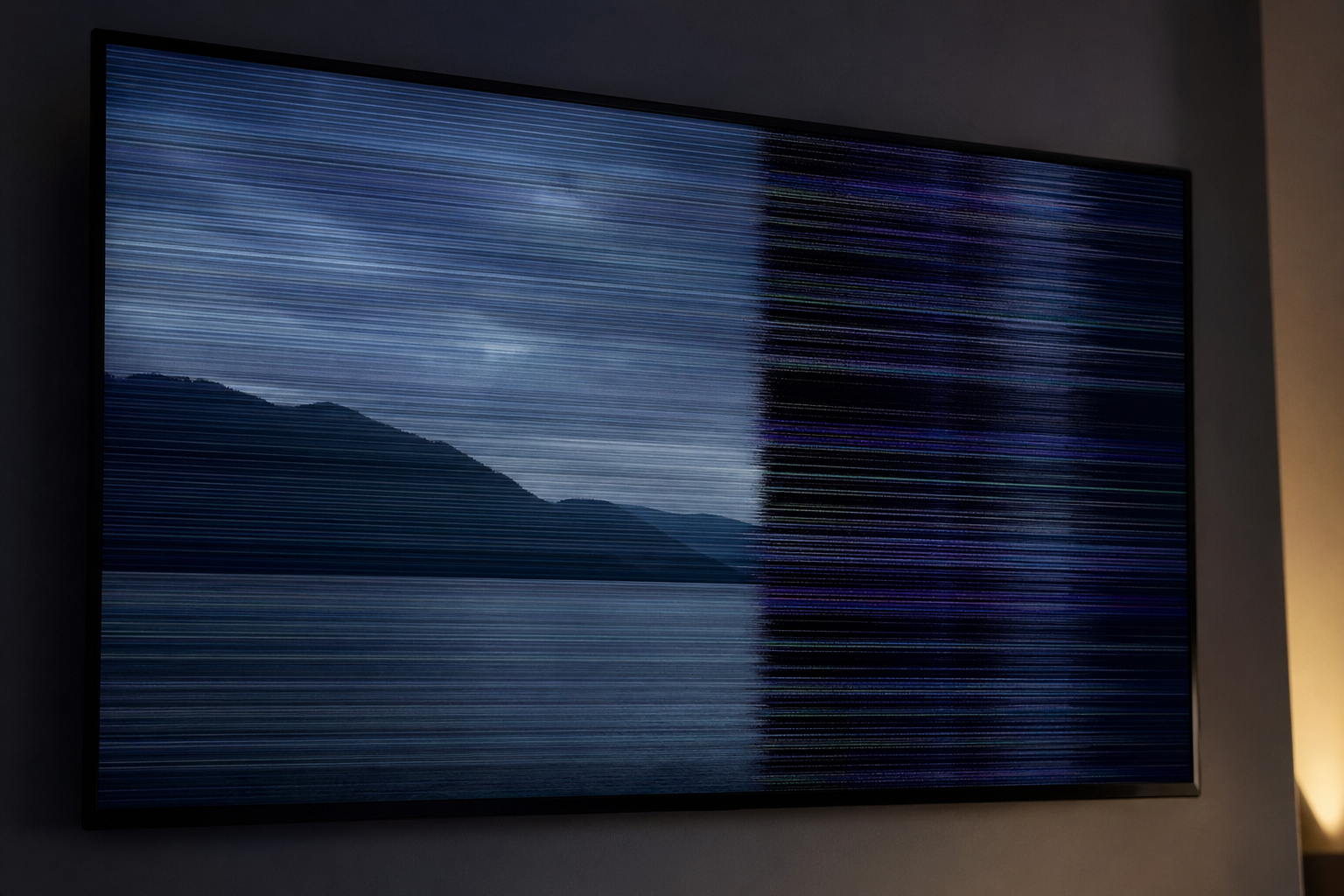
There is a version of this that happens in homes across Britain every day — not hot mics or wrong graphics, but a different kind of broadcast failure. You settle in to watch something you've been looking forward to. The programme starts. And then the screen flickers, goes black, produces a strange pattern of lines, or simply gives up entirely. The moment you were about to enjoy vanishes.
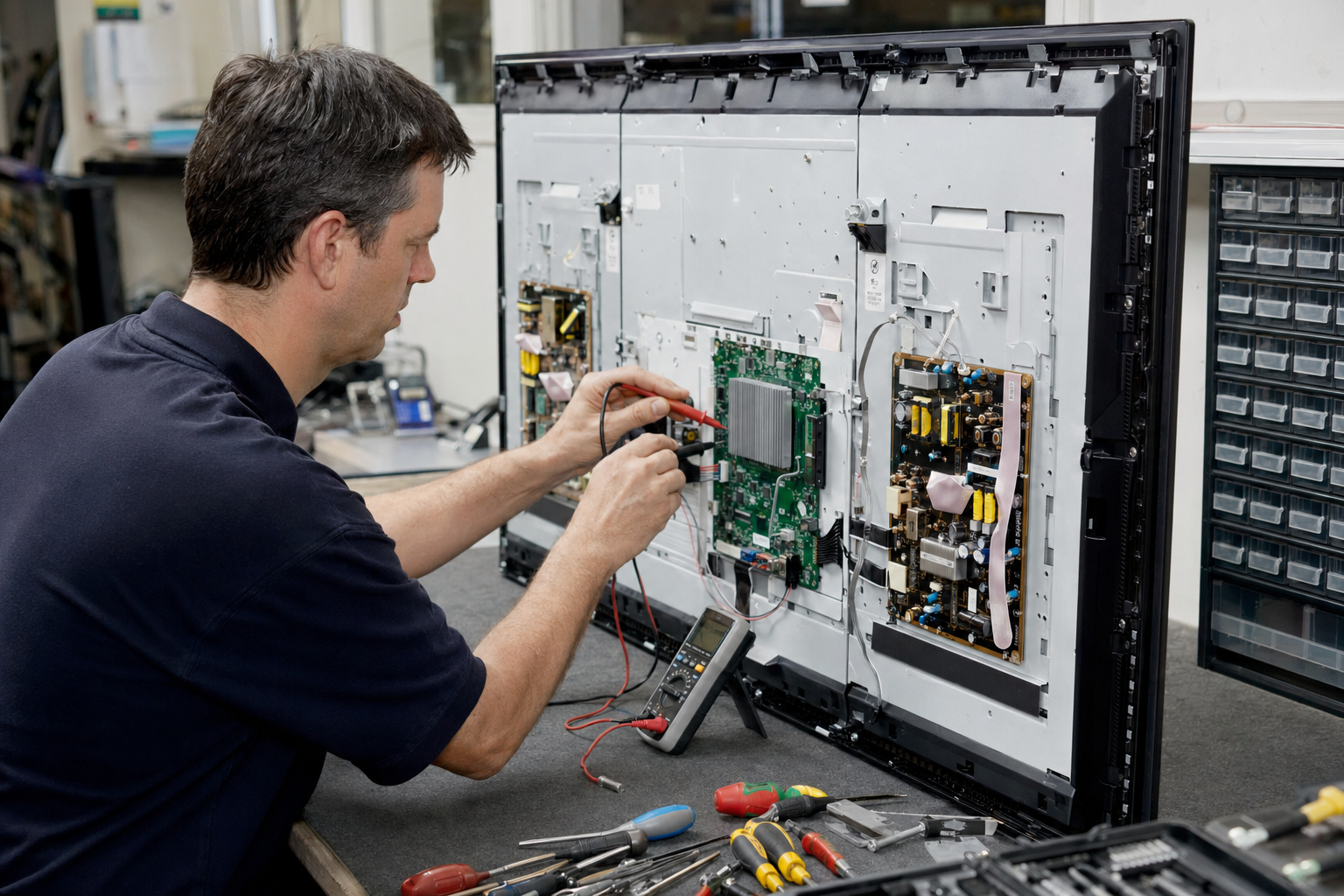
What causes it varies. Some problems — a loose HDMI connection, a firmware glitch, a frozen smart TV interface — can be resolved with a restart and five minutes of patient troubleshooting. But others are hardware faults: a failing backlight, a damaged panel, a fault in the power supply board. These require a qualified engineer with the right parts and the right tools.
Finding that engineer doesn't have to be complicated. PastureMate lists trusted TV repair services across the UK — from independent local workshops that have been repairing televisions for decades to mobile engineers who will come to your home and fix it in situ. All the services in our directory carry genuine customer reviews, so you can see what other households thought before you book.
Because the next live moment worth talking about — the next studio stumble, the next wayward golden retriever, the next ministerial indiscretion caught on a camera the minister forgot about — is happening soon. You'll want to have your television working when it does.
Is Your TV on the Blink?
Don't miss another unmissable moment. Find a trusted TV repair engineer in your area and get your set back in working order — usually with a warranty on all work done.
Find a TV Repair Service Near You →